
D-Day: June 6, 1944 — The Largest Amphibious Assault in History
June 6, 1944. 156,000 troops. Five landing beaches. One day that changed the course of World War II.
The Numbers That Matter
156,000 Allied troops landed on June 6, 1944. Over 4,400 died on D-Day alone. Thousands more were wounded. This was the largest amphibious assault ever mounted.
- 156,000 troops landed on June 6
- 4,400+ Allied deaths on D-Day alone
- 5,000+ ships and landing craft participated
- 11,000 aircraft provided air support
- Over 10,000 vehicles deployed
- 2,400 years’ worth of planning compressed into months
One Photograph
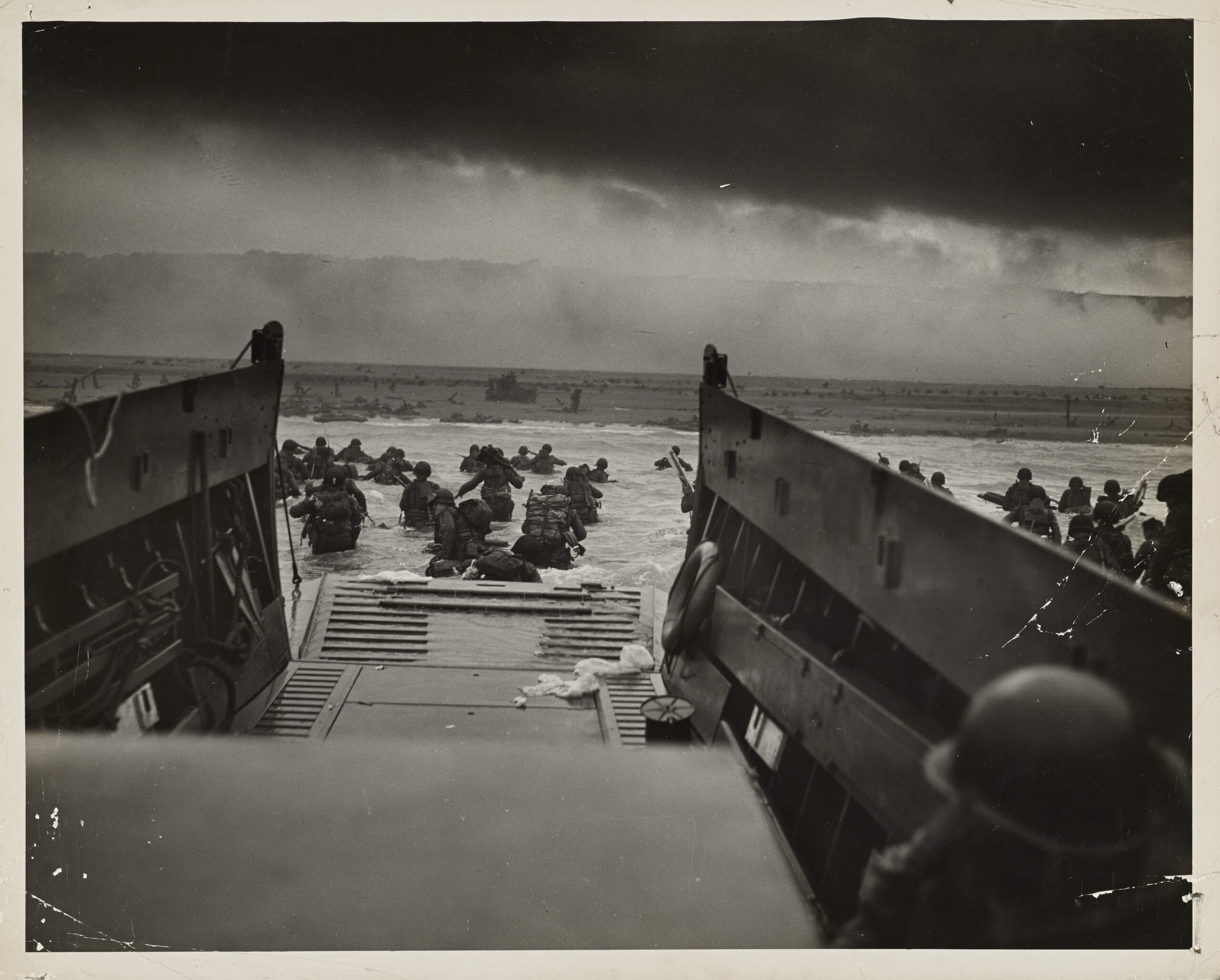
At 7:40 a.m. local time on June 6, 1944, U.S. Coast Guard Chief Photographer’s Mate Robert F. Sargent raised his camera. American soldiers from E Company, 16th Infantry Regiment, 1st Infantry Division (The Big Red One) were wading through waist-deep water toward Omaha Beach under German fire.
That photograph—titled “Into the Jaws of Death”—became one of the defining images of World War II.
It shows exactly what D-Day was: chaos, courage, soldiers moving toward fire with full knowledge of the cost.
A Historical Note:
“Into the Jaws of Death” is often credited to Robert Capa, the famous Life magazine photographer who also documented D-Day. But this defining image was taken by Coast Guard photographer Robert F. Sargent, shot from his landing craft as the ramp dropped. Both photographers captured the chaos and courage of Omaha Beach that day—from different perspectives. Both documented the same truth.
Why This Matters: Operation Overlord
On June 6, 1944, the Allies launched Operation Overlord. The goal: establish a beachhead in Nazi-occupied France and begin the liberation of Western Europe. The scale was unprecedented. The risks were enormous. The success was far from guaranteed.
By nightfall, over 156,000 troops had landed. By the end of June, over 850,000 troops were ashore. By August, France was being liberated.
D-Day wasn’t the end of the war. But it was the beginning of the end.
The Army Leadership
D-Day was primarily an Army operation, led by General Dwight D. Eisenhower as Supreme Allied Commander. The U.S. Army’s First Army, commanded by General Omar Bradley, bore the brunt of the American assault. While the Marines gained fame for their island-hopping campaigns in the Pacific, it was Army soldiers who faced the guns of Normandy.
The Five Landing Beaches:
- Utah Beach (U.S. Army First Army)
- Omaha Beach (U.S. Army First Army)
- Gold Beach (British Army)
- Juno Beach (Canadian Army)
- Sword Beach (British Army)
American forces faced the heaviest resistance at Omaha Beach, where over 2,000 soldiers became casualties in a single day. This was the sector where “Into the Jaws of Death” was taken.
The Cost in Human Terms
4,414 Allied deaths on June 6. But that’s just D-Day. The entire Normandy campaign (June-August 1944) saw:
- 209,000 Allied casualties (killed, wounded, captured, missing)
- Over 400,000 German casualties
- Over 200,000 French civilian casualties
These aren’t statistics. These are fathers, sons, brothers, husbands who didn’t come home. Families who waited for news that never came. Communities forever changed.
Why June 6 Matters
D-Day represents the moment when the Allies committed to liberating Western Europe through direct invasion. It was audacious, dangerous, and necessary. It succeeded against odds that could have easily gone the other way.
A few hundred meters of beach. A few thousand casualties. That was the price of establishing the beachhead that would eventually free Europe.
The men who landed knew they might not survive. Many didn’t. They went anyway.
We Remember
80 years later, we remember June 6, 1944. We honor those who died. We acknowledge the sacrifice of those who survived but were forever changed. We recognize that freedom isn’t free—it’s purchased with the blood of those willing to fight for it.
The beaches of Normandy are hallowed ground. The soldiers who landed there—American, British, Canadian, and others—changed history in a single day.
We will remember.
Image Attribution
Photograph: “Into the Jaws of Death”
Photographer: Chief Photographer’s Mate Robert F. Sargent, U.S. Coast Guard
Date: June 6, 1944, 7:40 a.m. local time
Location: Omaha Beach, Easy Red sector, Normandy, France
Subjects: E Company, 16th Infantry Regiment, U.S. 1st Infantry Division (The Big Red One)
Source: National Archives and Records Administration (NARA)
archives.gov/research/still-pictures/highlights/into-the-jaws-of-death
#DDay, #June6, #Normandy, #WWII, #Remember, #History, #Courage, #Freedom,